A Breast Cancer Survivor’s Reflection on Being Broken, Rebuilt, and More Beautiful Than Before
There’s a clean, unignorable fracture that appears in your life the moment you hear the words “You have cancer.” For me, that moment arrived on an ordinary March day—bright sunlight, a regular schedule, a to-do list that used to matter—right up until the phone call from my doctor, and a voice mail that tore a line straight through the world I knew.
I was diagnosed with breast cancer. I remember the doctor’s words, “if I call you, there’s a problem,” and ringing in my ears, the sudden shrivelling of the future, the sheer disbelief that my body—my strong, active, yoga-practicing, Pilates-loving body—had betrayed me. At 57, I thought I knew who I was. But cancer didn’t just break the plan. It broke me.
And yet, somewhere in the rubble of that breaking, I discovered something ancient and beautiful:
Kintsugi, the Japanese art of repairing shattered pottery with gold.
Kintsugi doesn’t hide the cracks.
Kintsugi illuminates them.
Kintsugi says: You were broken, yes—but you are still whole, and perhaps more beautiful than ever.
Today, at 60, I am three years post-diagnosis. I am scarred, changed, rebuilt, and different physically, mentally and spiritually. I am still healing. And yet, I can say this with my whole heart:
I am kintsugi.
And I am absolutely, unapologetically okay with it.
The Shattering: When Cancer Breaks Your Life Apart
Nothing prepares you for breast cancer. It is a punch, a theft, and a wildfire all at once. In a matter of weeks and months, my calendar filled up with biopsies, surgeon consultations, MRIs, chemotherapy schedules, bone scans, CT scans, radiology appointments, and the life-altering choice to undergo a bilateral mastectomy and aesthetic flat closure.
As cancer reality dug deeper, it tore through the identity I had cherished:
- My hair fell out.
- My eyebrows and eyelashes faded away.
- My breasts—my femininity—changed forever.
- My sense of safety evaporated.
- My marriage, my parenting, my friendships all shifted under the weight of this uninvited crisis.
I was a wife, mother, founder, marketer, creator, speaker, and entrepreneur. Suddenly, I was also a patient and a breast cancer survivor. A statistic. A woman fighting for her life.
Cancer doesn’t just break the body.
It breaks the story you were living in.
The In-Between: When You Are a Breast Cancer Survivor and in a Thousand Pieces
After surgery. After chemo. After radiation.
After the final appointment, when I rang the gong and said goodbye to active treatment, everyone expected you to celebrate. “It’s all over now,” they said. “You can get back to normal.”
But being a breast cancer survivor is not a celebration. There is no “normal.” Being a breast cancer survivor is an unravelling.
When treatment stopped, the adrenaline drained from my body and left me with a burning question: Who am I now? Because the woman before cancer was gone, and the woman after cancer had not yet been born.
This is the phase a breast cancer survivor rarely talks about—the after that feels like a void.
It is disorienting.
It is lonely.
It is scary.
And it is where I discovered kintsugi.
Kintsugi: What it Taught Me About Being a Breast Cancer Survivor
Kintsugi is the belief that broken things can be made whole again—not by returning them to how they were, but by transforming them into something new.
This is what resonated most deeply:
1. Kintsugi doesn’t pretend the break never happened.
Cancer happened.
I had both my breasts amputated.
I gained scars—physical and emotional.
These aren’t flaws. They’re proof I survived.
2. Kintsugi restores, but not to the original shape.
I didn’t bounce back.
I rebuilt.
My life looks different now—more intentional, slower in places, fiercely purposeful in others. That isn’t a step backward. It’s evolution.
3. Kintsugi uses gold to highlight what was once broken.
My cracks—fear, trauma, grief, vulnerability—are filled with gold: empathy, clarity, courage, advocacy, creativity, and a fierce desire to change cancer support for others.
Kintsugi mirrors the truth of cancer survivorship:
We are not who we were.
We are not who we feared we’d become.
We are something beautifully, powerfully in-between.
My Golden Seams: How Cancer Rebuilt Me
Here is the gold in my story:
✨ The gold was in learning to trust myself again.
After cancer and as a breast cancer survivor every ache feels suspicious. Every scan feels like a test of fate. But slowly, breath by breath, I’ve learned to live in my body again—not as a battlefield, but as a home.
✨ The gold was in redefining beauty.
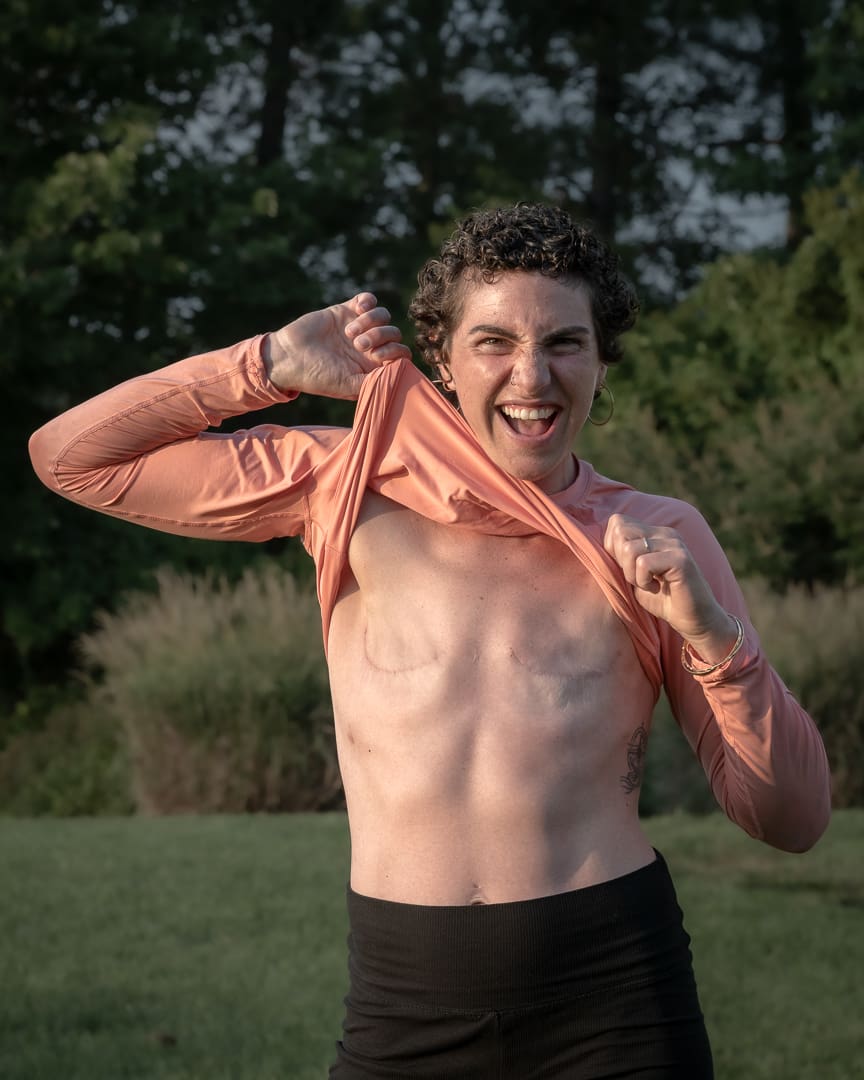
My mastectomy scars are not a wound.
They are my golden seams—my personal line of kintsugi.
I talk openly about going flat, choosing not to reconstruct, and the powerful movement of women doing the same—something I amplified in my work with photographer Hilary Gaulds and my book “Flat Please, Hold the Shame.”
Being “flat” is not something I hide.
It’s something I honour.
✨ The gold was in AskEllyn.ai.
My own loneliness, fear, and midnight Googling during chemotherapy led to something extraordinary:
AskEllyn, the world’s first AI-powered breast cancer companion designed to provide emotional and informational support 24/7 for a breast cancer survivor and a caregiver.
What started with my story is now a lifeline to thousands of people across the world. The very thing that broke me became the catalyst for a global movement we call conversational care.
AskEllyn now collaborates with major healthcare organizations, is the subject of a clinical evidence study, supports patients in nearly every country, and has become proof that technology can compassionately transform cancer support.
This is my most golden seam.
Kintsugi and the Survivor’s Journey: What We Must Learn to Accept
Kintsugi teaches three truths every breast cancer survivor eventually faces:
1. You will grieve the woman you were.
Letting go isn’t weakness. It’s wisdom.
You can love who you were—and still outgrow her.
2. You will need to rebuild your identity.
After cancer, everything feels different—your goals, your boundaries, your relationships, your values. That’s normal. Transformation always has a cost.
3. You will become stronger in ways that surprise you.
Your scars are strength.
Your softness is strength.
Your willingness to keep going is a strength.
You are not fragile porcelain.
You are gold-laced resilience.
The Practical, Unromantic, Real Parts of Being Kintsugi
Healing after cancer isn’t just spiritual. It’s daily, gritty work.
- The fatigue and chemo brain are real.
- The fear of recurrence is real.
- The hormone therapy side effects are real.
- The body image struggles are real.
- The post-treatment emotional crash is real.
- The bewilderment of your family and your friends who don’t always recognize the new “you” is real.
If you’re in this stage, know that you aren’t alone.
Healing is slow.
And that is exactly what kintsugi honours: slow repair that becomes sacred transformation.
We Are All Kintsugi: A Collective Survivor Truth
Every breast cancer survivor I know carries cracks:
- Women who chose reconstruction.
- Women who chose to go flat.
- Women who lost breasts, ovaries, hair, jobs, marriages, stability.
- Women who gained courage, purpose, and truth.
- Women who carry quiet fear in their pockets every day.
We do not always look like survivors.
Sometimes we look like women quietly getting groceries with scars under our shirts.
But we are kintsugi.
All of us.
Cracked.
Rebuilt.
Radiant.
Why Kintsugi Matters for Breast Cancer Survivors (and Those Who Love Them)
The kintsugi metaphor offers something medicine cannot:
Permission to be both broken and beautiful.
It removes shame.
It removes expectations.
It removes the pressure to pretend you’re okay.
And it replaces them with truth:
Your cracks are evidence of your courage.
Your healing is a work of art.
**Your new shape is not less than—
It is more than.**
If you need a reminder of this, here’s another resource:
➡️ AskEllyn Blog: The Ultimate Guide to the Butterfly Effect — How Small Choices Create Big Change
I Am Kintsugi, and I Am Okay With It
Cancer did not make me better.
Cancer did not make me grateful.
Cancer did not make me enlightened.
What made me stronger—
what made me golden—
was what came after:
The rebuilding.
The reframing.
The reclaiming.
The choice to live a more intentional life.
And most of all—the decision to turn my pain into purpose by building AskEllyn.
If you want to understand how conversational care can support you through your own cancer journey, visit:
And for deeper healing reflections:
➡️ AskEllyn Blog: “The Healing Power of Doing Nothing”
You Are Kintsugi Too
If you are reading this—flat, reconstructed, scarred, terrified, exhausted, powerful, hopeful, or all at once—please hear this:
You are not ruined.
You are rebuilt.
You are not broken.
You are becoming.
You are not less.
You are more.
You are kintsugi.
And you are allowed to be proud of every single golden seam.